
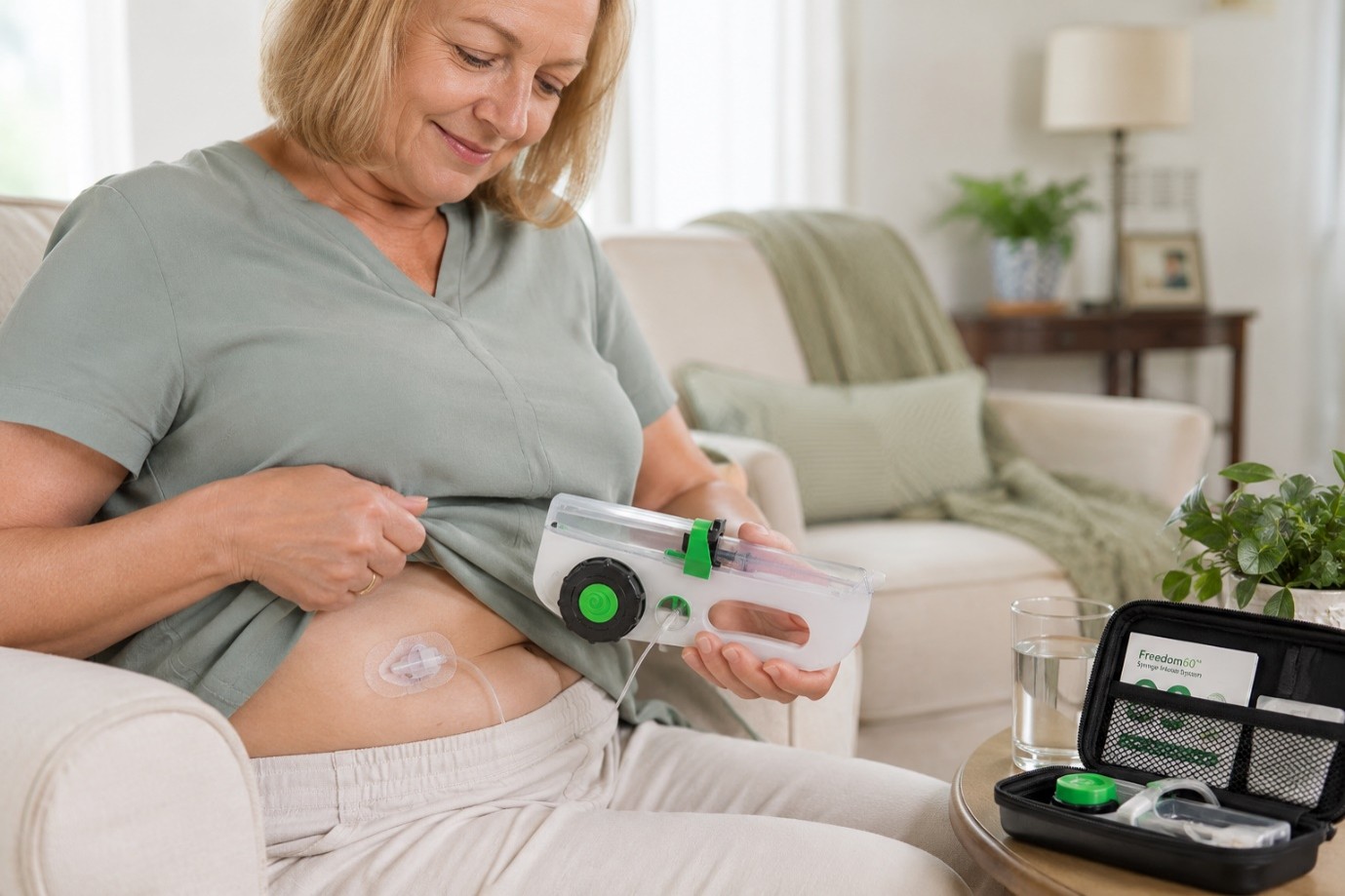
As more therapies transition from hospital-based intravenous (IV) administration to subcutaneous (SC) delivery, healthcare providers are increasingly looking for infusion systems that are not only clinically effective but also simple to use, reliable and suitable for home-based care. This shift is being driven by advances in biologic therapies, increasing demand for patient-centred care and growing pressure on healthcare systems to reduce hospital visits and provide a more efficient way to provide ongoing medication delivery while maintaining high standards of treatment.
Subcutaneous administration is now widely used across immunology, neurology, rare diseases and an increasing number of oncology pathways, offering patients greater flexibility and independence compared with traditional IV infusions. However, achieving consistent, comfortable and reliable drug delivery requires more than simply selecting the right medication. The infusion system itself plays a critical role in the patient experience and treatment outcomes.
Constant pressure infusion technology has become an established alternative to traditional electronic infusion pumps for many subcutaneous therapies. Rather than relying on batteries, motors or programmed software, these systems use a mechanical spring to apply consistent pressure throughout the infusion, allowing the flow rate to adjust naturally in response to tissue resistance. This creates a more responsive delivery profile while maintaining a simple, portable design.
The KORU Freedom60® Syringe Infusion System, available through Amdel Medical, is one example of this approach. When used alongside compatible accessories such as Precision Flow Rate Tubing, High-Flo™ Subcutaneous Safety Needle Sets and the Precision Flow Rate Controller, it provides clinicians and patients with a complete mechanical infusion solution designed specifically for subcutaneous therapies.
In this article, we explore the clinical principles behind constant pressure infusion systems, the evidence supporting their use and why they continue to play an important role in modern infusion therapy.
What is a constant pressure infusion system?
Unlike electronic infusion pumps that use motors and software to regulate medication delivery, constant pressure infusion systems rely on a precision-engineered mechanical spring mechanism to generate a consistent level of pressure throughout an infusion.
With the Freedom60 Syringe Infusion System, the spring applies continuous pressure to the syringe plunger. Rather than forcing medication into the subcutaneous tissue at a fixed rate, the system automatically responds to the body’s natural resistance. As resistance at the infusion site increases, the flow rate slows while the pressure remains constant, allowing the infusion to reach what KORU describes as a “dynamic equilibrium” between delivery pressure and tissue back pressure.
This approach differs fundamentally from many electronically controlled pumps, which are designed to maintain a programmed flow rate regardless of changing tissue conditions. By allowing flow to adapt naturally while maintaining consistent pressure, constant pressure systems are designed to support comfortable and controlled subcutaneous drug delivery. This allows for a much more hassle-free and comfortable experience for the patient.
The Freedom60 forms part of a complete infusion ecosystem, working alongside accessories that enable clinicians to tailor treatment according to the prescribed therapy and patient requirements. Compatible components include Precision Flow Rate Tubing, which determines the infusion rate, the Precision Flow Rate Controller for additional flow management where appropriate, and High-Flo Subcutaneous Safety Needle Sets, designed specifically for subcutaneous administration.
This mechanical design also eliminates many of the practical considerations associated with electronic devices. There are no batteries to charge, software updates to install or complex programming steps before treatment begins. Instead, clinicians and patients can focus on delivering therapy using a straightforward, portable system designed for repeat use across a range of approved subcutaneous treatments.
This is particularly useful for patients who want to receive infusion therapy on their own terms, whether at home, in work, or when travelling. As there are no electrical components or batteries required, it’s a truly portable system, where there is no need to worry about having to charge it before you can use it. Simply pick it up, load your medication, and you’re ready to go.
The clinical benefits of constant pressure infusion systems
Improving patient comfort and supporting consistent subcutaneous delivery
Patient comfort remains one of the most important considerations during subcutaneous infusion therapy. Local site reactions, including swelling, redness, discomfort and soreness, are among the most common challenges associated with SC administration and can influence both patient satisfaction and long-term treatment adherence.
One of the key advantages of constant pressure technology is the way it responds to changing conditions beneath the skin. As medication enters the subcutaneous tissue, local resistance naturally fluctuates. Instead of attempting to maintain a fixed flow rate, constant pressure systems automatically slow the infusion when increased resistance is encountered. This helps avoid excessive pressure at the infusion site while allowing delivery to continue safely and consistently.
According to KORU’s clinical guidance, this delivery method can help reduce the occurrence of common local site reactions such as swelling, redness and soreness by maintaining constant pressure throughout the infusion rather than forcing medication into tissue at increasing pressures.
This principle aligns with the broader evidence supporting subcutaneous therapies. Numerous studies have demonstrated that SC administration can provide clinical outcomes comparable to intravenous delivery for many treatments while offering improved convenience, greater patient independence and high levels of treatment satisfaction.
One study into the treatment experience of patients with cancer in the USA which compared SC vs. IV drug delivery found that out of 201 patients, 89.6% preferred SC delivery. Patients were more satisfied with SC delivery due to reduced treatment burden and improved independence, convenience and ability to cope with illness. When asked about receiving at-home SC injections, over 80% of patients perceived a potential benefit.
As more biologic medicines become available for subcutaneous administration, the choice of infusion technology becomes increasingly important in supporting these patient-centred treatment pathways.
For patients managing long-term conditions requiring regular infusions, improving the comfort and consistency of each treatment session can contribute to a better overall treatment experience and encourage continued adherence to prescribed therapy.
Mechanical simplicity and reliable performance
Reliability is essential for any infusion system, particularly as more therapies move into patients’ homes and community settings.
Constant pressure infusion systems achieve this through mechanical rather than electronic engineering. Because the Freedom60 operates without batteries, electricity or software programming, there are fewer components that require maintenance or calibration. This simplicity helps reduce setup complexity while providing clinicians and patients with a predictable method of drug delivery.
Another important advantage is how the system behaves when resistance changes during an infusion. Rather than attempting to force medication through increasing back pressure, the Freedom60 automatically adjusts the flow rate while maintaining constant delivery pressure. Manufacturer guidance highlights that this design helps eliminate concerns associated with uncontrolled bolus delivery, overflow or runaway infusion while maintaining pressure until treatment is complete.
Emerging evidence also suggests that mechanical simplicity can positively influence the patient experience. In a 2025 head-to-head evaluation comparing two subcutaneous infusion systems, 89% of participants reported faster setup with the Freedom60 system, while 78% preferred it overall. Participants cited ease of setup, portability and fewer preparation steps as key factors influencing their preference, demonstrating how intuitive device design may help reduce treatment burden for patients and caregivers alike.
As healthcare providers continue to expand home-based infusion pathways, these practical advantages become increasingly valuable. A system that combines reliable mechanical performance with simple operation can help support consistent therapy delivery while reducing complexity for clinicians, community nursing teams and patients managing long-term treatment outside traditional hospital environments.

Operational benefits of constant pressure infusion systems
Supporting home-based care and ambulatory treatment pathways
Healthcare systems worldwide are increasingly moving appropriate therapies outside of the hospital setting. Rising patient numbers, increasing demand for infusion services and the growing availability of subcutaneous formulations have accelerated the shift towards home-based and ambulatory care, helping to reduce pressure on hospital resources while improving patient experience.
Research has consistently shown that many patients prefer subcutaneous administration over intravenous treatment where clinically appropriate. Compared with IV infusions, subcutaneous therapies can reduce treatment times, minimise the need for repeated hospital visits and allow patients to receive treatment in a more familiar and comfortable environment. Reviews have also highlighted improvements in patient satisfaction, quality of life and healthcare resource utilisation when suitable therapies are transitioned to subcutaneous delivery.
Infusion technology plays a key role in enabling this transition. Systems used outside of hospital environments must be intuitive, portable and reliable enough to support treatment with minimal disruption to patients’ daily lives.
The KORU Freedom60® Syringe Infusion System has been designed with these requirements in mind. Its lightweight mechanical design allows patients to move freely during treatment without being connected to mains power or carrying heavy electronic equipment. With no batteries to recharge or software to programme, the system offers a straightforward solution for patients receiving regular infusions at home or in community settings.
For healthcare providers, this simplicity may also reduce the level of training required for patients and caregivers, helping to build confidence in self-administration while supporting wider ambitions to deliver more care closer to home.
Reducing treatment burden and simplifying clinical workflows
As healthcare professionals continue to balance increasing patient demand with limited clinical resources, reducing unnecessary complexity within treatment pathways has become an important consideration.
Every additional programming step, device check or troubleshooting process adds time to clinical workflows. While electronic infusion pumps remain appropriate for many therapies, mechanical constant pressure systems offer a simplified alternative where suitable, reducing reliance on software, charging schedules and electronic maintenance.
Recent research comparing the Freedom60 with another commercially available subcutaneous infusion system demonstrated several practical advantages from both patient and caregiver perspectives. Participants reported significantly faster setup times using the Freedom60, with 89% indicating that it was quicker to prepare and 78% stating that they preferred the device overall. Ease of use, portability and fewer preparation steps were among the most frequently cited reasons for this preference.
Although individual clinical pathways will vary, reducing setup time may offer benefits across a range of healthcare environments, including:
- Supporting more efficient patient training.
- Simplifying homecare visits.
- Reducing treatment burden for patients and carers.
- Improving confidence in self-administration.
- Allowing healthcare professional to focus more on patient care than device management.
As more long-term therapies transition into community settings, equipment that is straightforward to use may help improve both operational efficiency and the overall patient experience.
A complete constant pressure infusion solution
While the Freedom60 forms the centre of the KORU constant pressure infusion system, its performance is supported by a range of compatible accessories that enable clinicians to tailor treatment according to the prescribed therapy and individual patient needs.
FreedomEdge® Syringe Infusion System
For therapies requiring smaller syringe volumes or lower flow rates, the FreedomEdge® Syringe Infusion System provides the same constant pressure technology in a compact format. Designed for low-volume subcutaneous infusions, it offers healthcare professionals another flexible option within the KORU portfolio.
Precision Flow Rate Tubing
Rather than relying on electronic programming, infusion rates within the Freedom system are determined using Precision Flow Rate Tubing. Each tubing set is manufactured to deliver a predetermined flow rate, allowing clinicians to select the most appropriate configuration for individual treatment protocols while maintaining the benefits of constant pressure delivery.
High-Flo™ Subcutaneous Safety Needle Sets
The infusion site itself can significantly influence patient comfort and treatment success. High-Flo Subcutaneous Safety Needle Sets have been specifically designed for subcutaneous administration and are available in a range of needle lengths and gauges to accommodate different patient requirements and prescribed therapies.
Precision Flow Rate Controller
Where additional flexibility is required, the Precision Flow Rate Controller allows further adjustment of infusion characteristics while maintaining compatibility with the wider Freedom infusion system.
Together, these products create an integrated constant pressure infusion solution that supports consistent delivery while enabling clinicians to configure therapy according to individual clinical requirements rather than relying on a one-size-fits-all approach.
Looking ahead: Supporting the future of subcutaneous therapies
The continued growth of subcutaneous therapies is transforming how healthcare is delivered across a wide range of specialties. From primary immunodeficiencies and neurological conditions to rare diseases and an increasing number of oncology treatments, more patients are benefiting from therapies that can be administered safely outside of traditional hospital settings. As this shift continues, infusion systems must not only deliver medication reliably but also support a positive patient experience and efficient clinical workflows.
Mechanical constant pressure systems offer a practical alternative for many subcutaneous therapies by combining predictable performance with a straightforward user experience. Their ability to respond naturally to changing tissue resistance, without the complexity of electronic programming, supports the wider move towards patient-centred care that empowers individuals to receive treatment in the setting that best suits their needs. At the same time, their straightforward mechanical design provides valuable operational benefits.
As innovation in biologic medicines continues, the demand for infusion systems that can support safe, efficient and comfortable subcutaneous delivery is only expected to increase.
Discover our constant pressure infusion range
Amdel Medical supplies the complete KORU constant pressure infusion portfolio, supporting healthcare professionals with proven solutions for subcutaneous drug delivery across a range of clinical applications.
To learn more about the Freedom60 Syringe Infusion System, FreedomEdge, Precision Flow Rate Tubing, High-Flo Subcutaneous Safety Needle Sets and Precision Flow Rate Controller, explore our product range or contact our team to discuss the most appropriate solution for your clinical service.