

Oncology is an area of medicine that continues to grow and evolve. It is now estimated that 1 in 2 people will be diagnosed with cancer in their lifetime, and Macmillan estimates there are around 3.5 million people in the UK living with cancer, a figure they believe will continue to grow. As a result, extensive research is put into cancer care to try and develop new treatments, technologies and ways of delivering treatments to reduce mortality rates and enhance quality of life for patients.
As these oncology treatment pathways continue to evolve, healthcare providers are increasingly looking for ways to improve patient experience, reduce treatment burden, and optimise healthcare resources without compromising clinical outcomes.
One of the most significant developments in recent years has been the growing adoption of subcutaneous (SC) therapies across oncology. From immunotherapies and monoclonal antibodies to supportive care medications, more treatments are becoming available via subcutaneous administration, offering substantial benefits for patients, hospitals, and infusion services alike.
However, successful subcutaneous therapy delivery relies on accurate, consistent, and reliable administration systems. Constant pressure infusion systems provide a simple, effective solution that supports the safe and comfortable delivery of subcutaneous treatments across hospital, outpatient, and homecare settings. As a result, treatment for patients is less invasive and disruptive which allows them greater freedom to enjoy their life while receiving their necessary cancer treatment.
In this article, we explore the growing role of subcutaneous therapies in oncology, the evidence supporting their use, and how Amdel Medical’s range of Freedom infusion systems and accessories can help healthcare providers deliver these treatments efficiently.

The growing shift towards subcutaneous oncology treatments
For over a decade, Macmillan reports published figures on the number of people waiting for treatment for cancer have shown the huge challenge facing NHS cancer services, with reportedly tens of thousands of people waiting too long for vital treatment. This is something that has worsened in recent years due to ongoing shortages, the effects from COVID-19 and overcrowding in the NHS.
In 2023 and 2024, performance against cancer waiting times targets across the UK fell to among the worst on record. According to a Macmillan/YouGov Survey in January 2025, half of people receiving cancer treatment in the UK (50%), we worried about general pressures on the NHS affecting their chances of survival.
Historically, many oncology treatments have been administered intravenously (IV), requiring lengthy appointments, specialist infusion chairs, and significant healthcare resources. This exasperates the issues the NHS is facing. Hospitals only have space for so many patients a day and if appointments are lengthy and involve a lot of staff attention and resources, it means some may be left waiting for treatment.
In recent years, advances in drug formulation have enabled many therapies to be delivered subcutaneously instead, allowing medications to be administered into the tissue beneath the skin where they are absorbed gradually into the bloodstream. This has presented a potential solution to ease up waiting times for patients eligible for subcutaneous treatments and help improve their overall quality of life during treatment.
According to research published by the European Society for Medical Oncology (ESMO), subcutaneous administration can significantly reduce treatment times while maintaining comparable efficacy and safety profiles to intravenous alternatives for many therapies.
Organisations such as Cancer Patients Europe have highlighted how subcutaneous administration can improve convenience, reduce disruption to daily life, and lessen the overall treatment burden experienced by cancer patients.
This means that patients can receive treatment more efficiently and flexibly. As subcutaneous treatments are shorter and can also be administered more easily in different locations, so hospital attendance is not always necessary, freeing up more time and resources in hospitals while allowing more patients to receive vital treatment at a faster pace.
Benefits of subcutaneous therapies for oncology patients
Reduced treatment time
One of the most widely recognised advantages of subcutaneous therapies is the significant reduction in administration time. Many intravenous oncology infusions can take several hours to complete. In contrast, subcutaneous injections or infusions may be administered in minutes.
Research published in the Journal of Clinical Oncology has demonstrated that patients consistently report higher satisfaction with shorter administration times associated with subcutaneous treatments, as well as convenience and reduced venipunctures. For patients undergoing frequent cancer treatment, reducing time spent in clinics can have a substantial positive impact on quality of life.

Improved patient experience
Cancer treatment often involves repeated hospital visits, prolonged waiting times, and extended periods attached to infusion pumps. This hassle combined with the effects of treatment associated with chemotherapy and other cancer treatments can have a serious effect on patient’s wellbeing.
While they may already be struggling with the effects of treatment and not feeling great, the constant travelling to hospital, waiting around and spending extended period in hospital receiving treatment or in discomfort can exasperate their symptoms and even influence how well the treatment actually works if their body is exhausted.
Subcutaneous therapies can offer:
- Greater comfort during treatment
- Reduced disruption to work and family life
- Increased flexibility in care pathways
- Less time travelling to and from treatment centres
- Potential for administration in community or homecare settings
A recent review published on PubMed examining patient perspectives on subcutaneous oncology treatments found consistently high patient preference rates when compared with intravenous administration. It also reported that SC administration was associated with savings in healthcare provider (HCP) time and patient chair time. Direct and indirect cost-savings were also observed.
Reductions in waiting times and optimised treatment outcomes
As subcutaneous treatments take less time and can be delivered in more flexible environments, this means waiting times for patients to receive these treatments can be significantly reduced. It also means that patients may have improved medication adherence and allows for optimised treatment outcomes through minimised or avoided treatment delays, with SC treatment being much more accessible.

Supporting home-based cancer care
Healthcare systems worldwide are increasingly focused on delivering appropriate care closer to home. Subcutaneous therapies support this transition by enabling selected treatments to be administered safely outside traditional hospital settings.
This can be particularly beneficial for patients:
- Living in rural areas
- With mobility limitations
- Receiving long-term maintenance therapies
- Seeking greater independence during treatment
Home-based administration can reduce stress associated with hospital attendance while maintaining continuity of care. Reducing hospital visits for those who are receiving cancer treatment can also significantly help reduce the risk of them contracting diseases, especially when many have compromised immune systems during treatment.
In fact, many treatments that are available through SC delivery, are actually those that have less of an effect on the immune system, so can in fact reduce negative symptoms overall and present an alternative treatment pathway for patients that allows them a greater quality of life overall.
As an example, during the COVID-19 pandemic, a scheme was introduced for patients in England with cancer to swap their treatments for alternatives that could be taken at home. This scheme worked so well it was extended several times.
Speaking about the scheme at the time, Clare Turnbull, professor of cancer genomics at the Institute of Cancer Research, said, “These treatment swaps, such as targeted cancer drugs that can be taken at home and have less of an impact on patients’ immune system, have the potential to make a huge difference in keeping vulnerable patients safe. This is an important step among many that are needed to tackle the cancer backlog that has built up over the past year.”
Home-based care can also be particularly beneficial to those patients who live with cancer long-term, which may be treatable but not curable. This allows them the ability to receive their ongoing treatment while enjoying their normal day-to-day life, with minimal hospital visits disrupting them.
Benefits for hospitals and oncology services
The advantages of subcutaneous therapies extend beyond patient experience; they also present many benefits for hospitals and healthcare professionals.
Increased capacity within oncology units
As cancer incidence continues to rise, many oncology departments face increasing pressure on infusion suites and treatment facilities. As mentioned earlier, pressure on NHS cancer services has been mounting. As of April 2026, the latest analysis and reports on cancer waiting times show that all three key cancer waiting time targets were missed.
Increases in missed targets mean people who need potentially lifesaving treatment are waiting longer, which is a big concern. This is where subcutaneous administration of cancer treatment can help both reduce waiting times and increase capacity in oncology units.
Because subcutaneous administration generally requires significantly less chair time than intravenous infusion, healthcare providers can:
- Treat more patients per day
- Reduce bottlenecks within infusion centres
- Improve operational efficiency
- Optimise staffing resources
This creates valuable capacity within busy oncology departments, helping more patients receive treatment faster, hopefully helping the NHS to meet their cancer waiting time targets in future.
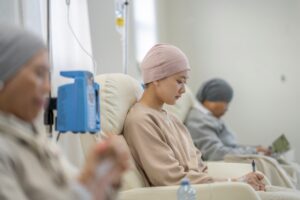
Reduced healthcare costs
Multiple studies have demonstrated that subcutaneous administration can reduce healthcare resource utilisation. For example, an article published in PubMed reviewing intravenous versus subcutaneous administration of oncology therapies from an economic perspective noted that both direct and indirect costs savings were observed.
Another study conducted in the Netherlands which looked at cost benefits associated with subcutaneous versus intravenous administration of pertuzumab and trastuzumab (treatments for breast cancer) showed that subcutaneous administration reduced:
Patient care time by an average of 106 minutes (85.5%) for maintenance doses (from 124.3 mins to 18.1 mins)
- Patient care time by an average of 287 mins (96%) for loading doses (from 299 min to 12 min)
- Active healthcare professional time decreased by 17 min (54.1%) for maintenance doses
- Active healthcare professional time decreased by 25 min (66.7%) for loading doses
- Drug administration costs by approximately €172 per maintenance dose
- Drug administration costs by approximately €403 per loading dose
It was concluded that nationwide adoption in the Netherlands could create capacity for around 22,000 additional treatments annually and save 4.0 full-time equivalent healthcare professionals.
Overall, if in the UK, we hospitals were to switch to subcutaneous delivery of oncology treatments, potential savings may include:
- Lower nursing time requirements
- Reduced consumable usage
- Fewer infusion-related resources
- Reduced clinic occupancy time
- Lower infrastructure demands
A growing body of health-economic research suggests that subcutaneous therapies can contribute to more sustainable oncology service delivery models.
Reduced risk of vascular access complications
Intravenous therapies often require venous access devices, which can introduce risks including:
- Infection
- Phlebitis
- Extravasation
- Catheter-related complications
Subcutaneous administration avoids many of these challenges, simplifying treatment delivery for suitable therapies.
Why consistent delivery matters in subcutaneous therapy
While it is clear subcutaneous administration offers numerous benefits, successful treatment depends upon controlled and predictable medication delivery. Variations in infusion rate may affect patient comfort, local tissue tolerance, absorption characteristics and treatment consistency.
This is where constant pressure infusion systems play a critical role. Unlike electronic pumps, constant pressure systems use mechanical pressure to deliver medication at a controlled rate without batteries, programming, or complex electronics.
The result is a simple, reliable, and portable infusion solution that supports both clinical and homecare environments. Less upkeep is required due to the fact no batteries or electricity is required to run the device, allowing for much smoother and reliable delivery of medication.

Supporting oncology subcutaneous therapies with Freedom Infusion Systems
Amdel Medical supplies a comprehensive range of products designed to support subcutaneous medication delivery. These devices work together as an ecosystem to provide reliable and effective subcutaneous administration, which is ideal for oncology care both in clinics and at home. Learn more about these products below.
Freedom60® Syringe Infusion System
The Freedom60® Syringe Infusion System delivers medication using a patented constant pressure mechanism.
Key benefits include:
- Consistent delivery pressure
- No batteries or programming required
- Lightweight and portable design
- Suitable for homecare and outpatient use
- Enhanced patient mobility during treatment
The system has become widely recognised for supporting subcutaneous therapies across multiple clinical applications, including oncology care.
FreedomEdge® Syringe Infusion System
The FreedomEdge® system is specifically designed for lower-volume subcutaneous infusions.
Benefits include:
- Compact design
- Controlled delivery rates
- Comfortable patient experience
- Ideal for therapies requiring precise administration
Its portability makes it particularly suitable for home-based oncology care programmes.
Flow rate control is critical in subcutaneous infusion therapy. Precision Flow Rate Tubing™ helps clinicians achieve predictable infusion times by controlling medication flow rates without electronic programming.
Benefits include:
- Accurate infusion control
- Multiple flow rate options
- Simplified treatment standardisation
- Reliable performance across care settings
HighFlo™ Subcutaneous Safety Needle Sets
Designed specifically for subcutaneous therapy delivery, HighFlo™ needle sets provide:
- Enhanced patient comfort
- Consistent medication delivery
- Integrated safety features
- Reliable tissue access
These characteristics are particularly important for patients receiving repeated treatments.
Precision Flow Rate Controller™
The Precision Flow Rate Controller™ provides additional control over infusion delivery speed and consistency. This allows clinicians to tailor administration rates to treatment protocols and patient requirements while maintaining the simplicity of a mechanical infusion system.
The future of oncology treatment delivery
The trend towards subcutaneous oncology therapies is expected to continue as pharmaceutical manufacturers develop new formulations and healthcare systems prioritise patient-centred care.
Companies including Bristol Myers Squibb have highlighted the potential of subcutaneous immunotherapy to transform patient experience by reducing administration times and supporting more flexible treatment pathways.
As oncology services continue to expand community and home-based care models, reliable delivery technologies will play an increasingly important role in ensuring treatments can be administered safely, effectively, and comfortably.
Supporting modern oncology care with Amdel Medical
As demand for subcutaneous oncology therapies grows, healthcare providers require delivery systems that combine reliability, simplicity, and patient comfort.
Amdel Medical’s range of Freedom infusion systems, Precision Flow accessories, and HighFlo needle sets are designed to support efficient subcutaneous therapy delivery across hospitals, infusion centres, and homecare environments.
By enabling controlled constant-pressure administration, these solutions help healthcare providers deliver modern oncology treatments while improving patient experience and supporting more sustainable care pathways.
To learn more about Amdel Medical’s full range of subcutaneous infusion solutions or to get more information on how we can help support your transition to subcutaneous administration for cancer treatments, get in touch with our team today.